
Reduce identification delays
Clear equipment details shorten the time spent working out which replacement component is actually required.
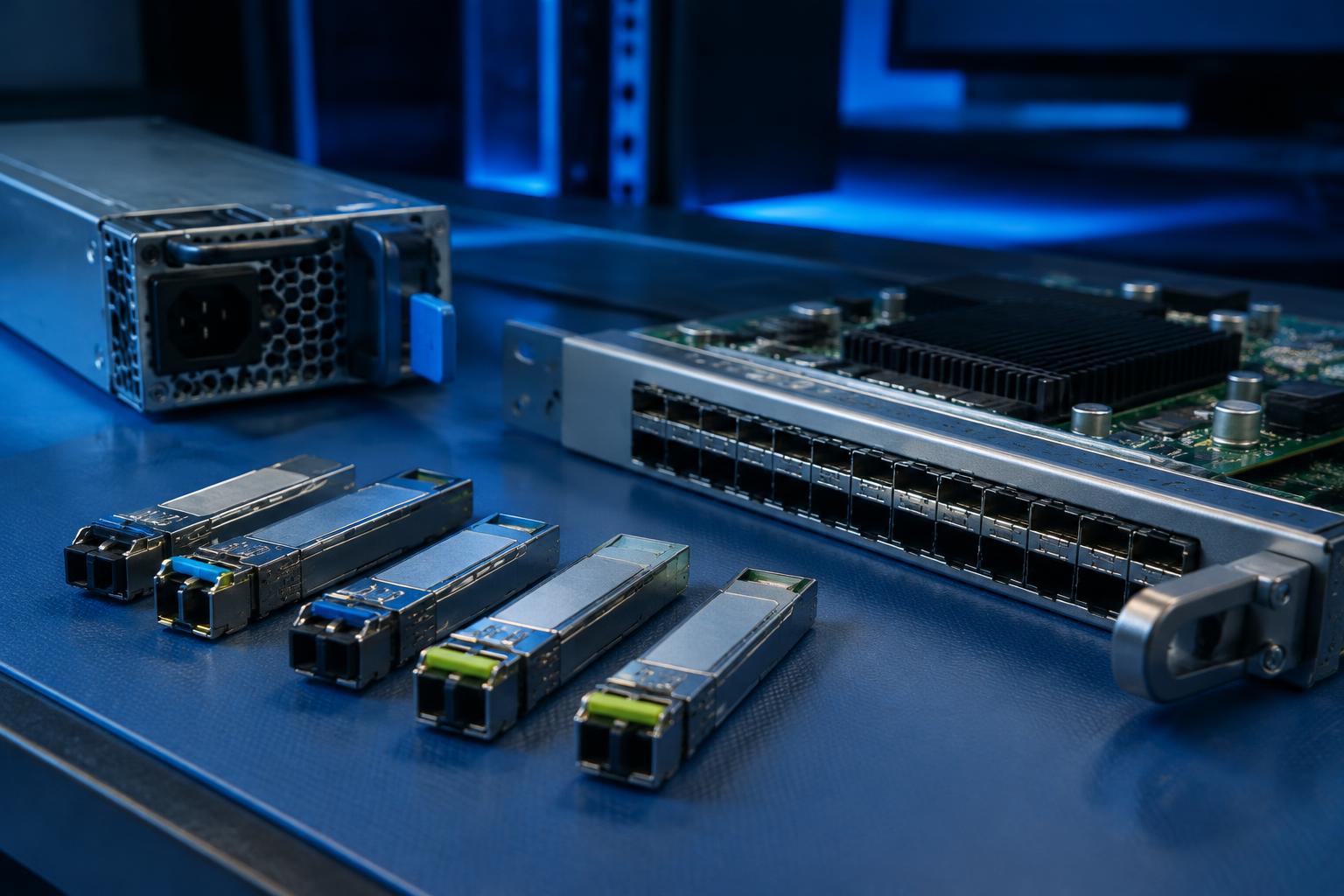
Keep Critical Infrastructure Ready with the Right Hardware.
When infrastructure components fail, become obsolete, or need replacement, sourcing the right hardware can be a challenge. QSAT helps organizations navigate equipment requirements across enterprise networking, data centre infrastructure, and satellite communications environments.
From identifying replacement components to coordinating hardware sourcing and lifecycle requirements, our approach focuses on compatibility, operational needs, and informed procurement decisions.
Technology infrastructure depends on the availability of compatible, reliable components. A failed network module, an unavailable power supply, or an obsolete hardware component can complicate maintenance and delay restoration.
QSAT's spares and hardware support helps organizations define their requirements, identify suitable replacement options, and coordinate sourcing according to technical specifications, procurement constraints, and operational priorities.
The exact scope of sourcing, availability, delivery, and support should be confirmed for each requirement.

Clear equipment details shorten the time spent working out which replacement component is actually required.
Consider likely component failures and ageing equipment before they affect maintenance or restoration.
Replacement choices should reflect the existing platform, model, revision, interfaces and software dependencies.
Multiple sites and technically diverse installations make consistent hardware records and requirements more important.
Clear information on condition, terms and estimated delivery supports better planning and lifecycle decisions.
Weigh the options against operational priorities, remaining equipment life and budget before committing.
Typical requirement areas QSAT can discuss. Examples illustrate scope — they are not a stock list, and availability is confirmed per request.
Hardware requirements for switching and routing environments.
Selection depends on the existing platform, model, software requirements, interfaces and compatibility.
Sourcing and replacement requirements for data centre infrastructure — QSAT does not manufacture these products.
Requirements are reviewed against the existing equipment and installation.
Components that connect equipment across the network.
Optical specification, interface type, transmission distance, supported speeds and platform compatibility must be checked before procurement.
Supporting hardware for satellite-enabled enterprise connectivity.
Not every satellite terminal, antenna, modem or manufacturer-specific spare will be available; each requirement is confirmed individually.
Power and supporting components associated with supported installations.
Suitability depends on equipment specifications and the requirements of the installation.
Help identifying replacement options for older equipment, including compatible alternatives where available.
Legacy parts can have restricted availability and may need additional validation. Sourcing of discontinued hardware cannot be guaranteed.
A five-step approach for working through hardware requirements, from identification to lifecycle planning.
Collect the manufacturer, model, part number, quantity, installation environment and intended use. Where relevant, gather serial numbers, photographs, interface specifications and existing configuration details.
Review the available technical information to identify suitable replacement candidates and highlight compatibility considerations. Compatibility is not assumed or certified without appropriate technical verification.
Where sourcing support is available, identify potential procurement options based on specification, availability information, condition requirements, budget and lead time. Any new, refurbished or used option is clearly disclosed when it is actually offered.
Review the proposed equipment, quantity, commercial terms, warranty conditions and estimated delivery arrangements before an order is confirmed. Availability and delivery estimates are verified for the specific order.
Where included in the agreed scope, consider replacement planning, future procurement needs and the impact of end-of-life or end-of-support equipment. Installation, configuration and commissioning are separate unless expressly included.
Deciding in advance which components should be available for planned maintenance or potential failures helps reduce uncertainty when it matters. QSAT can discuss critical spares planning based on your environment.
Identifying components that could materially affect service continuity
Reviewing equipment criticality and operational impact
Considering replacement lead times and supplier availability
Prioritizing components according to business risk
Reviewing legacy equipment and end-of-life risks
Establishing appropriate replenishment and review processes
This is a planning framework for discussion. It does not represent a managed inventory programme, automated replenishment platform or guaranteed replacement service.
Hardware requirements evolve over time. Reviewing component lifecycle status before a failure occurs gives more room to plan.
Once equipment is no longer sold, replacement options can narrow over time.
Equipment without support may face software, security or repair limitations.
Availability and compatibility of replacements can change as platforms age.
A like-for-like part is not always the most practical choice for the environment.
Older hardware can increase the likelihood and impact of component failure.
Anticipating refresh requirements supports more orderly procurement planning.
A replacement part is only useful when it is suitable for the environment in which it will operate.
Providing accurate equipment details — make, model, part number, revision and installed software — supports a more reliable assessment.
Hardware sourcing should consider more than price and availability. Compatibility, product condition, warranty terms, provenance, and lifecycle status can all affect the suitability of a replacement component.
QSAT can help customers identify the key considerations for their requirements and clarify the available commercial and technical information before procurement decisions are finalized.
| Consideration | What to check |
|---|---|
| Manufacturer & part number | Validate the manufacturer and exact part number against the installed equipment. |
| Model & revision | Confirm compatibility with the equipment model and hardware revision. |
| Condition & grading | Understand the stated product condition and how it has been graded. |
| Warranty terms | Check the warranty coverage, its duration and any exclusions that apply. |
| Supplier & provenance | Understand where the product comes from and the supplier information available. |
| Software & licensing | Review firmware, software, licensing or entitlement dependencies where applicable. |
| Returns & delivery | Confirm return, replacement and delivery terms before ordering. |
| Restrictions | Note limitations affecting legacy, region-specific or discontinued components. |
Teams whose hardware requirements this approach is designed to support.
Replacement components and procurement support for business-critical IT infrastructure.
Hardware requirements involving switches, routers, interfaces, optics and connectivity components.
Server, storage, power and supporting infrastructure component requirements.
Hardware sourcing considerations for network and connectivity infrastructure.
Replacement and supporting hardware requirements in relevant satellite communication environments.
Equipment requirements for deployments, expansions, maintenance and upgrades.
Challenge: A component failure requires the team to identify a technically suitable replacement.
Consideration: Realistic sourcing and delivery options must be confirmed against verified availability.
Intended benefit: A clearer path to informed restoration decisions.
Challenge: Additional components are needed as the network, server, storage or connectivity environment grows.
Consideration: New components should be compatible with the installed platform and design.
Intended benefit: Expansion that stays consistent with the existing environment.
Challenge: An installation relies on ageing hardware with uncertain replacement availability.
Consideration: Discontinued parts may be limited, so alternatives may need assessment.
Intended benefit: Better visibility of options before a failure occurs.
Challenge: Hardware requirements need to be understood before scheduled maintenance or a refresh.
Consideration: Lead times and lifecycle status should be reviewed in advance.
Intended benefit: More orderly planning for maintenance windows.
Spare parts and hardware procurement can complement wider infrastructure initiatives.
Server and storage components often need replacement or expansion within existing platforms.
Explore Compute & Storage InfrastructureModernization programmes raise questions about which hardware to retain, replace or refresh.
Explore Data Centre ModernizationPatch leads, optics and connectivity accessories must match the cabling infrastructure.
Explore Structured CablingPower and cooling-related components depend on the installation and its specifications.
Explore Power & Precision CoolingEdge devices, interfaces and power supplies support multi-link enterprise connectivity.
Explore Hybrid SD-WANSatellite deployments rely on supporting and interconnection hardware at each site.
Explore Enterprise Mobility & VSATSite connectivity may involve accessories and network equipment around the terminal.
Explore Starlink LEO ConnectivityEnterprise LEO services can require compatible interconnection and network hardware.
Explore Eutelsat OneWeb LEO ConnectivityVessel and offshore installations may need replacement components planned around port calls.
Explore Maritime VSATMonitoring can surface hardware faults that lead to a replacement requirement.
Explore 24/7 NOC Services & MonitoringStart with the customer's equipment details, technical specifications and operating environment.
Account for model, interface, platform and lifecycle requirements when evaluating replacement candidates.
Encourage clear communication around product condition, availability, commercial terms and estimated delivery.
Consider the role of a component within the wider network, data centre or connectivity environment.
Share your hardware requirements with QSAT. Provide the equipment model, part number, quantity, and intended application so that sourcing options, compatibility considerations, and availability can be reviewed.