Reliable Communications Start with the Right Deployment.
Deploying radio and satellite communication terminals requires more than placing equipment at a site. It means understanding the environment, preparing the installation location, coordinating equipment and resources, configuring the terminal and verifying readiness for use.
QSAT supports deployment activities for enterprise, industrial, maritime and remote-site environments—from planning through installation, testing and handover.
Site preparationInstallation & configurationVerification & handover
Beyond equipment delivery
From Equipment Delivery to Operational Readiness
Radio and satellite terminals often operate where access, power, mounting, cabling and environmental conditions require preparation before installation begins. Poorly planned deployment can cause delays, configuration problems, connectivity issues and additional site visits.
QSAT helps customers coordinate practical deployment steps with attention to site readiness and installation quality. The exact activities depend on the equipment, site conditions and customer requirements; physical installation alone does not establish network-side service readiness.
Site access and installation readiness
Terminal and antenna positioning
Mounting arrangements and cable routing
Power and network connectivity
Configuration and integration coordination
Testing, documentation and operational handover
Practical deployment support
Core Deployment Capabilities
Plan the physical installation and its technical dependencies together. Direct execution or coordination through relevant teams is defined for each agreed activity.
Satellite Terminal Deployment
Plan fixed, remote and mobile satellite terminal installations, including LEO, GEO and other architectures where applicable. Review the installation location, physical constraints and terminal requirements before coordinating equipment and resources.
Terminal and antenna installation coordination
Mounting arrangements and cable routing
Power and network connection requirements
Configuration, connectivity checks and installation records
Equipment suitability and execution scope are assessed per project. QSAT does not manufacture or imply ownership of terminals or antennas.
Radio Communications Equipment Deployment
Coordinate radio equipment installation for enterprise and operational environments. Equipment positioning, antenna arrangements and interface requirements need to be aligned with the approved design and customer operations.
Radio equipment placement and installation checks
Antenna and mounting arrangement planning
Power, cabling and configuration coordination
Operational verification with customer and technology teams
Radio licensing, frequency coordination and regulatory approval services are not assumed to be included.
Antenna Installation and Positioning
Antenna location influences installation practicality and communications readiness. Assess suitable mounting points, obstructions, access and environmental constraints before positioning equipment.
Site suitability and mounting considerations
Physical positioning and alignment coordination
Cable routing and connection inspection
Line-of-sight or satellite visibility review where relevant
Alignment requirements vary by satellite system, terminal model and location. Signal levels or connectivity performance require site-specific assessment.
Terminal Configuration and Connectivity Checks
After installation, verify equipment condition, power and connections before coordinating configuration against the approved design. Record unresolved issues rather than treating physical installation as proof of service readiness.
Initial inspection and equipment status verification
Network interfaces and antenna connection checks
Approved configuration and basic functional checks
Service activation coordination and issue recording
Provider-side activation, network provisioning and platform-specific settings may require the service provider or customer technical team.
Site Readiness and Installation Coordination
Identify dependencies before site mobilisation. QSAT can help align installation schedules with customer IT, facilities and operations teams so that access, equipment and local preparation are considered together.
Site access and physical installation constraints
Equipment placement, mounting and power availability
Cable paths and installation schedule coordination
Equipment and resource readiness before mobilisation
Location, safe access, permissions and resource availability inform the agreed deployment plan.
Testing, Commissioning and Handover Support
Validate the agreed installation activities before operational handover. Physical and connectivity checks provide a record of completed work, observations and items needing further attention.
Physical installation and equipment power-up inspection
Cable, network interface and terminal status checks
Connectivity verification with relevant providers
Issue register, installation documentation and handover
This is not formal manufacturer certification or guaranteed end-to-end acceptance testing. Checks and acceptance responsibilities are agreed in advance.
Potential operating environments
Deployment Where Communications Matter
These environments illustrate deployment requirements, not completed QSAT projects or a promise of technician availability in every location.
Enterprise and Corporate Facilities
Terminals supporting business connectivity and backup communications, coordinated with local IT and facilities requirements.
Remote and Industrial Sites
Communications at locations with limited terrestrial connectivity, accounting for access, environmental exposure and local infrastructure.
Maritime Environments
Vessel and maritime-platform equipment, subject to vessel requirements, installation arrangements and applicable permissions.
Infrastructure and Utilities
Radio and satellite equipment at distributed operational facilities and geographically remote infrastructure installations.
Data Centres and Network Facilities
Terminals forming part of wider communications infrastructure, external connectivity or an assessed backup-link arrangement.
Temporary and Project Locations
Time-bound installations for construction, project operations and temporary facilities, with mobilisation and handover needs defined upfront.
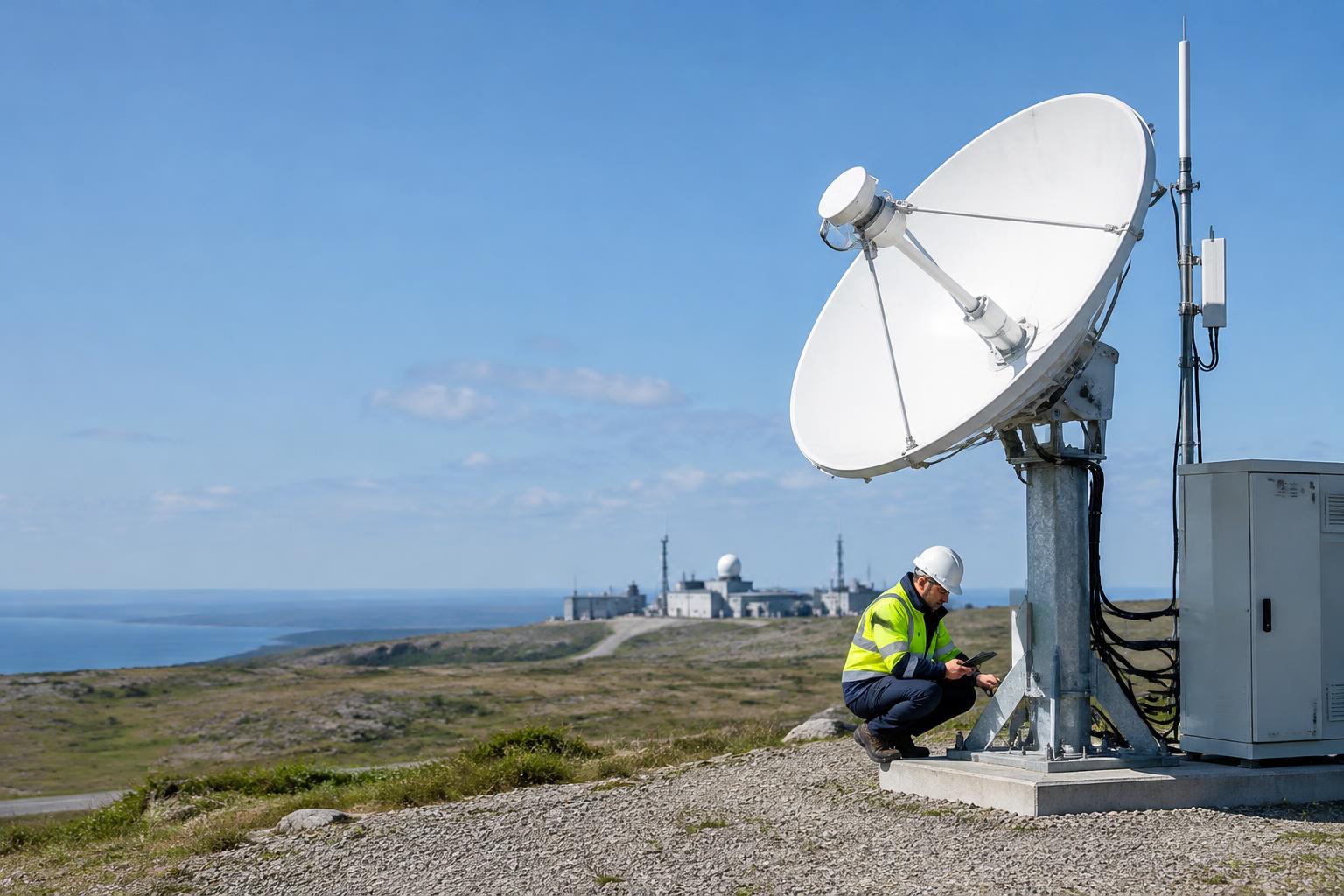
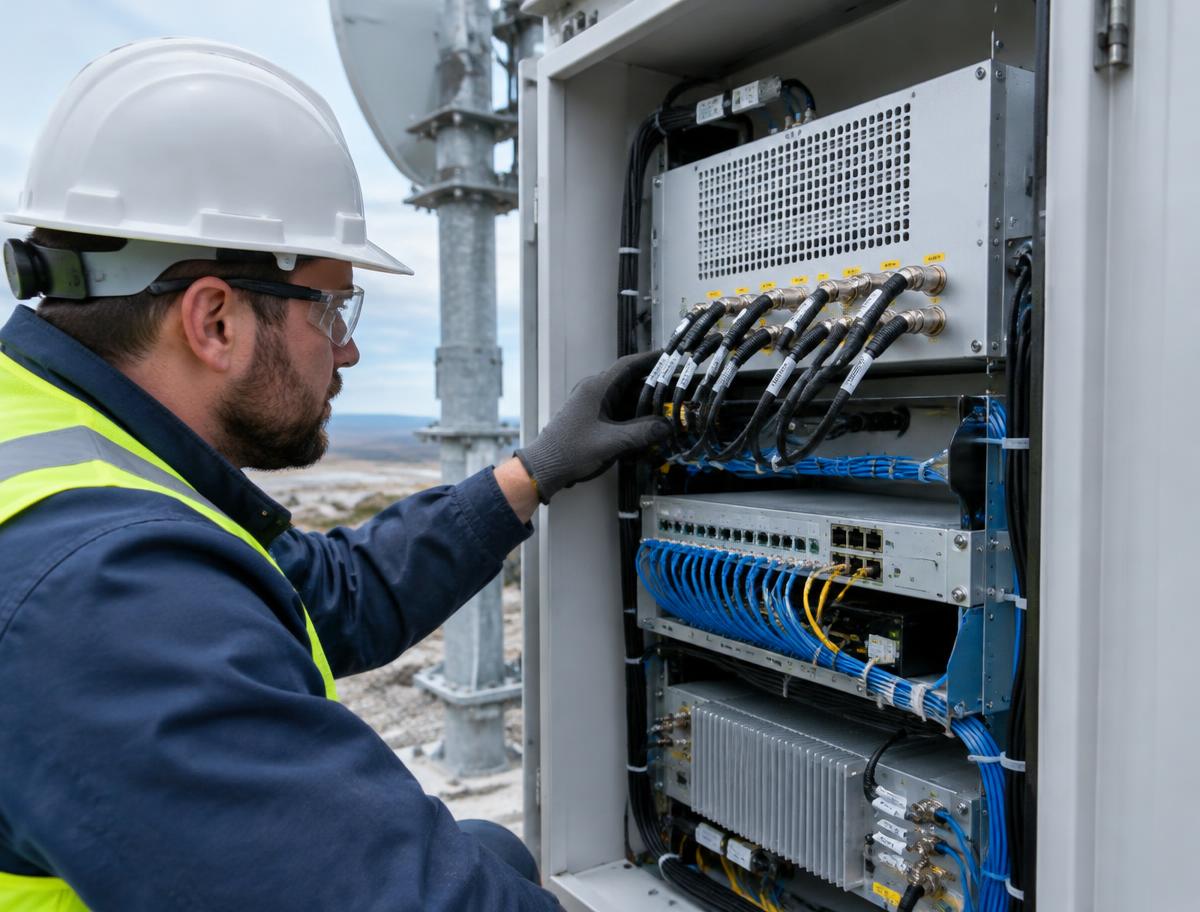
Illustrative deployment imagery; not a record of a QSAT customer installation.
An agreed six-step approach
The Deployment Lifecycle
From understanding the requirement to handing over the installation, each stage makes dependencies and responsibilities explicit.
Step 01
Requirements Assessment
Understand communications objectives, equipment type, installation environment and operational requirements.
Define scope, equipment needs, resource coordination, installation sequence and an agreed schedule.
Step 04
Installation and Configuration
Coordinate or execute agreed installation, connections and configuration activities against the approved scope.
Step 05
Testing and Verification
Perform agreed physical and connectivity checks with customer teams and service providers where needed.
Step 06
Documentation and Handover
Record completed activities, installation information and outstanding items for the operational team.
Equipment and technology coverage
Terminals, Antennas and Supporting Equipment
Deployment projects may involve the following categories, selected according to the installation and communications requirements.
Satellite Terminals
Fixed satellite terminals
Mobile and transportable terminals
LEO communication terminals
GEO communication terminals
VSAT equipment
Radio and Antenna Systems
Radio communication equipment
Satellite antennas
Antenna mounting systems
RF cabling
Associated RF components
Supporting Infrastructure
Network interfaces
Connectivity equipment
Power accessories
Installation accessories
Equipment connection components
Support is subject to equipment requirements and agreed project scope. These categories do not imply stock availability, manufacturer authorisation or compatibility with every product.
Dependencies made visible
Addressing Practical Deployment Challenges
Deployment Challenge
How Deployment Support Helps
Remote installation locations
Plan site access, resources and installation dependencies.
Complex mounting requirements
Review mounting arrangements and physical constraints.
Antenna positioning requirements
Coordinate suitable positioning and alignment activities.
Multiple equipment components
Sequence installation work and verify component connections.
Power and cabling dependencies
Identify preparation requirements before mobilisation.
Provider-side activation dependencies
Coordinate provisioning and activation with the relevant provider.
Multi-location deployments
Align site planning, schedules and deployment documentation.
Incomplete handover information
Record installation activities, observations and outstanding issues.
Complementary capabilities, distinct scopes
How Deployment Fits within QSAT’s Wider Capabilities
Terminal deployment concentrates on the physical installation and commissioning activities at the site. Wider architecture integration and field resource provision address related—but different—requirements.
Terminal Deployment
Gets communications equipment installed, connected, checked and ready for operational handover within an agreed site scope.
Telecommunications Systems Integration
Coordinates multiple communications technologies and network components into a wider solution, beyond the physical terminal installation.
On-Demand Field Engineers
Provides field engineering resources for agreed on-site technical activities. Personnel requirements and availability are assessed separately.
Related QSAT solutions
Connect Site Deployment with Your Wider Requirements
Telecommunications Systems Integration
Connect terminal equipment with the wider communications architecture.
A coordinated plan supports an orderly transition from equipment delivery to operations, without assuming guaranteed installation timelines or specific cost savings.
Preparation Before Mobilisation
Identify equipment, access and local preparation requirements before committing resources to the site.
Clearer Installation Dependencies
Make mounting, power, cabling and provider-side requirements visible within the deployment plan.
Coordinated Technical Teams
Clarify responsibilities between customer IT, facilities, field personnel and service providers.
Organised Installation Activities
Sequence equipment placement, connections and configuration against the agreed scope.
Visibility into Outstanding Issues
Record verification results and unresolved items so operational readiness is not assumed.
A Documented Operational Transition
Provide consistent installation records and handover information for the teams taking responsibility.
Frequently asked questions
Radio and Satellite Deployment: Your Questions Answered
Discuss your deployment requirements
Planning a Radio or Satellite Terminal Deployment?
Whether you are deploying a satellite terminal at a remote facility, installing radio communications equipment or coordinating a multi-location deployment, QSAT can help assess the requirements and plan the next steps. Speak with our team about your equipment, installation environment and deployment objectives.